Aktuellt alternativ
Minoxidil
Appliceras i hårbotten för lämpligt håravfall. Vissa människor märker tidigt avfall; synlig nytta tar vanligtvis runt 2–4 månader, och fortsatt användning krävs normalt för att underhålla den.
Läs minoxidilguiden →Bedömning av håravfallsmönster, varaktighet, medicinska orsaker och lämplighet för licensierad eller etablerad behandling.
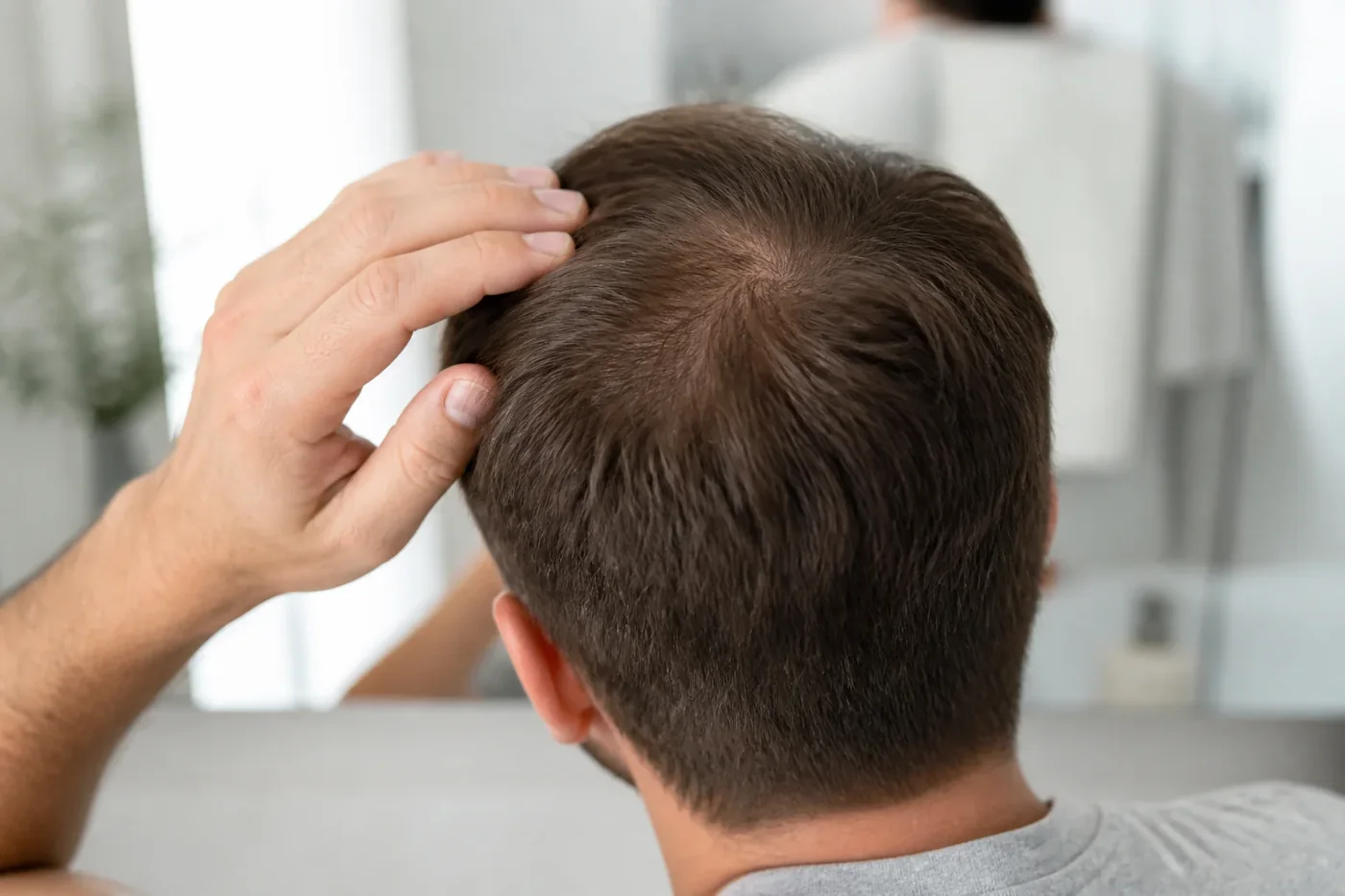
Syftet är att först identifiera mönstret och den troliga orsaken och sedan välja en realistisk behandlings- och översynsplan. Behandling kan bromsa ytterligare förlust och kan förbättra densiteten, men ingen medicin fungerar för alla eller återställer folliklar som inte längre är aktiva.
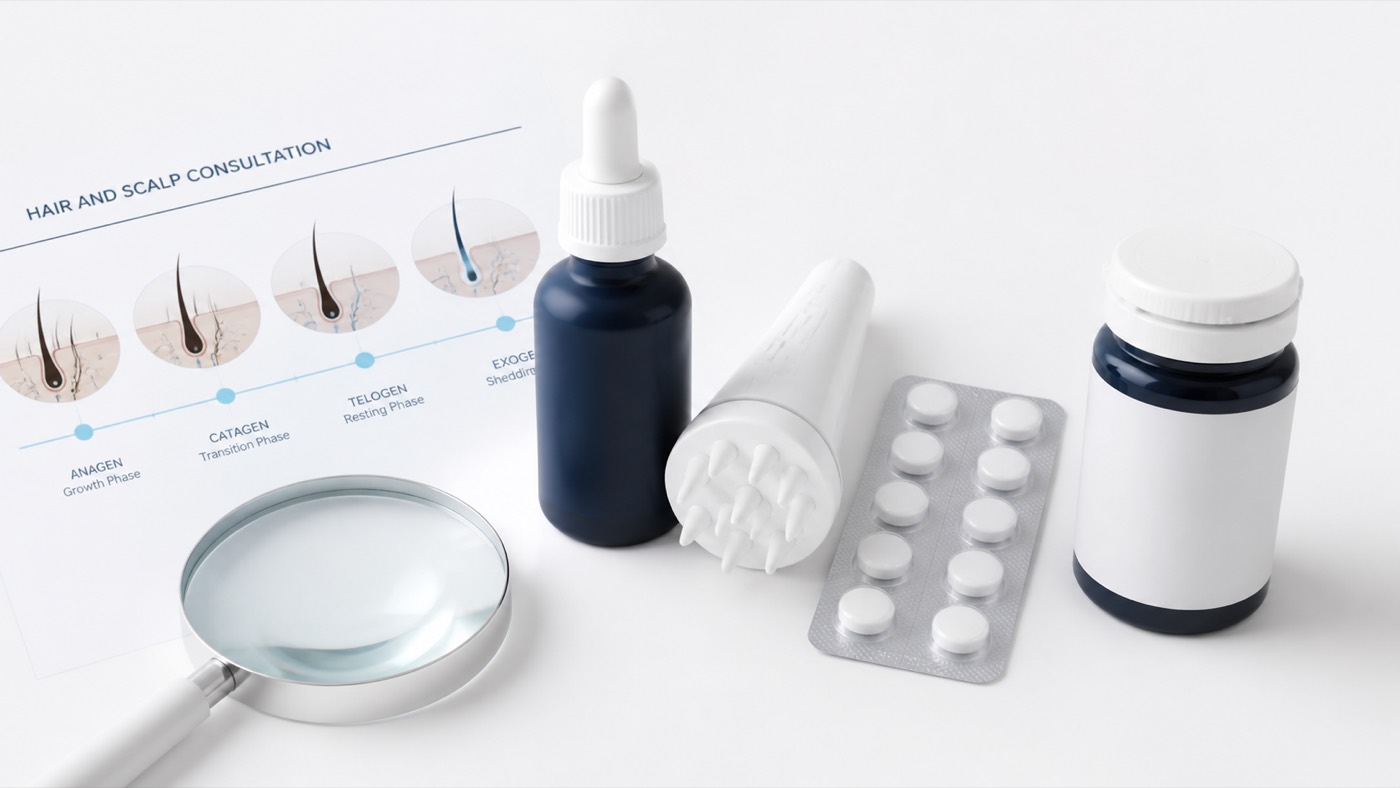
Appliceras i hårbotten för lämpligt håravfall. Vissa människor märker tidigt avfall; synlig nytta tar vanligtvis runt 2–4 månader, och fortsatt användning krävs normalt för att underhålla den.
Läs minoxidilguiden →Minskar DHT och är licensierad för lämpliga män med tidigt manligt håravfall. Stabilisering kräver vanligtvis 3–6 månader; nyttan bibehålls endast medan behandlingen fortsätter. Lämplighet och eventuella sexuella effekter eller humöreffekter måste ses över.
Läs finasteridguiden →Dutasteride sänker även DHT men är godkänd för prostatabehandling, inte håravfall. Varje övervägande utanför etiketten kräver ett individuellt medicinskt beslut, noggrann riskdiskussion och är aldrig ett automatiskt recept.
Läs dutasteride-guiden →Det kan bromsa utvecklingen och kan förbättra antalet hårstrån eller täthet när folliklarna förblir aktiva. Långvarig fullständig skallighet är mycket mindre sannolikt att växa igen.
Nej. Håret växer i cykler. Grundbilder och konsekvent användning är viktigt eftersom meningsfull jämförelse vanligtvis tar flera månader.
Nej. Svaret beror på diagnos, varaktighet, mönster, vidhäftning och individuell biologi. Plötslig eller ojämn förlust kan behöva undersökning eller blodprov istället.
Det första mötet fastställer diagnosen, kontrollerar säkerheten och kommer överens om hur framstegen ska mätas. Stabil behandling kan då gå över till en enklare förnyelseväg.
Granska debut, familjehistoria, hårbottenfotografier, mediciner, hälsotillstånd och om undersökning eller blodprov behövs.
Om det är lämpligt förklarar läkaren medicinen, korrekt användning, biverkningar, realistiska förväntningar och när man ska ta kontakt.
Granska konsekventa fotografier, avfall, täthet, vidhäftning och biverkningar. Behandlingen kan fortsätta, ändras eller avbrytas.
När diagnos, medicin och dos är fastställd och oförändrad kan lämpliga förnyelser använda den fokuserade repetitionstjänsten. Nya symtom, biverkningar eller dosförändringar kräver ytterligare en läkarkonsultation.
Klinisk information: finasterid produktinformation · minoxidil bipacksedel · EMA säkerhetsgranskning
Välj en tillgänglig telefon eller säker videokonsultation.
Ha symtom, mediciner och relevant bevis redo.
Läkaren kontrollerar lämplighet, säkerhet och undersökningsbehov.
Få en plan, recept vid behov eller lokal remiss.
Plötsligt, fläckvis eller inflammerat håravfall, ärrbildning, systemiska symtom eller håravfall under graviditeten kan kräva undersökning, blodprov eller remiss från specialist.
Ring 112 omedelbart för en livshotande nödsituation, medvetslöshet, ett anfall, svåra andningssvårigheter, kollaps eller strokesymtom.
Nej. Behandlingen kan bromsa utvecklingen och kan förbättra tätheten medan folliklarna förblir aktiva, men den kan inte garantera återväxt och är mindre sannolikt att återställa långvarigt fullständigt håravfall.
Synlig nytta behöver vanligtvis två till fyra månaders konsekvent användning. Vissa användare märker tillfälligt ökat avfall tidigt i behandlingen, och nyttan kräver vanligtvis fortsatt användning.
Finasteride behöver vanligtvis tre till sex månader innan stabilisering eller synlig nytta kan bedömas. Fortsatt behandling krävs i allmänhet för att bibehålla effekten.
Nej. Dutasteride är godkänd för benign prostataförstoring snarare än håravfall. Alla off-label diskussioner kräver en individuell medicinsk bedömning och garanterar inte förskrivning.
Läkaren går igenom mönstret, tidpunkten, familjehistoria, hårbottenfotografier, mediciner, hälsotillstånd och tidigare behandling och beslutar sedan om behandling, undersökning eller blodprov är lämpligt.
Inte alltid. När behandling och dos väl är etablerad, oförändrad och väl tolererad, kan lämpliga förnyelser använda den fokuserade tjänsten för upprepad recept. Förändringar, biverkningar eller nya symtom kräver en annan läkares konsultation.
En användbar jämförelse sker ofta efter tre till sex månader med konsekventa fotografier. Läkaren kan rekommendera ett annat intervall beroende på behandling, diagnos och säkerhetsöverväganden.
Plötsligt, fläckvis, inflammerat eller ärrbildande håravfall, hårbottensjukdom, systemiska symtom eller misstänkta näringsmässiga eller hormonella orsaker kan kräva undersökning, blodprov eller remiss från specialist.
Utforska alla publicerade lokala behandlingssidor, använd Málaga-guiden som exempel på vårdvägen eller fortsätt med de kliniska jämförelseartiklarna.
Utforska alla publicerade behandlingssidor för städer, öar och lokala områden.
Lokal vårdEngelskspråkig bedömning, behandlingsplanering och apoteksvägledning.
HälsoinformationJämförelser, realistiska tidsramar, uppföljning och säkerhet.
JämförelseFörstå de olika rollerna och uppföljningsvägen.
Utforska 401 städer, öar och regioner med lokala referenser. Varje sida länkar tillbaka till detta nationella behandlingsnav.