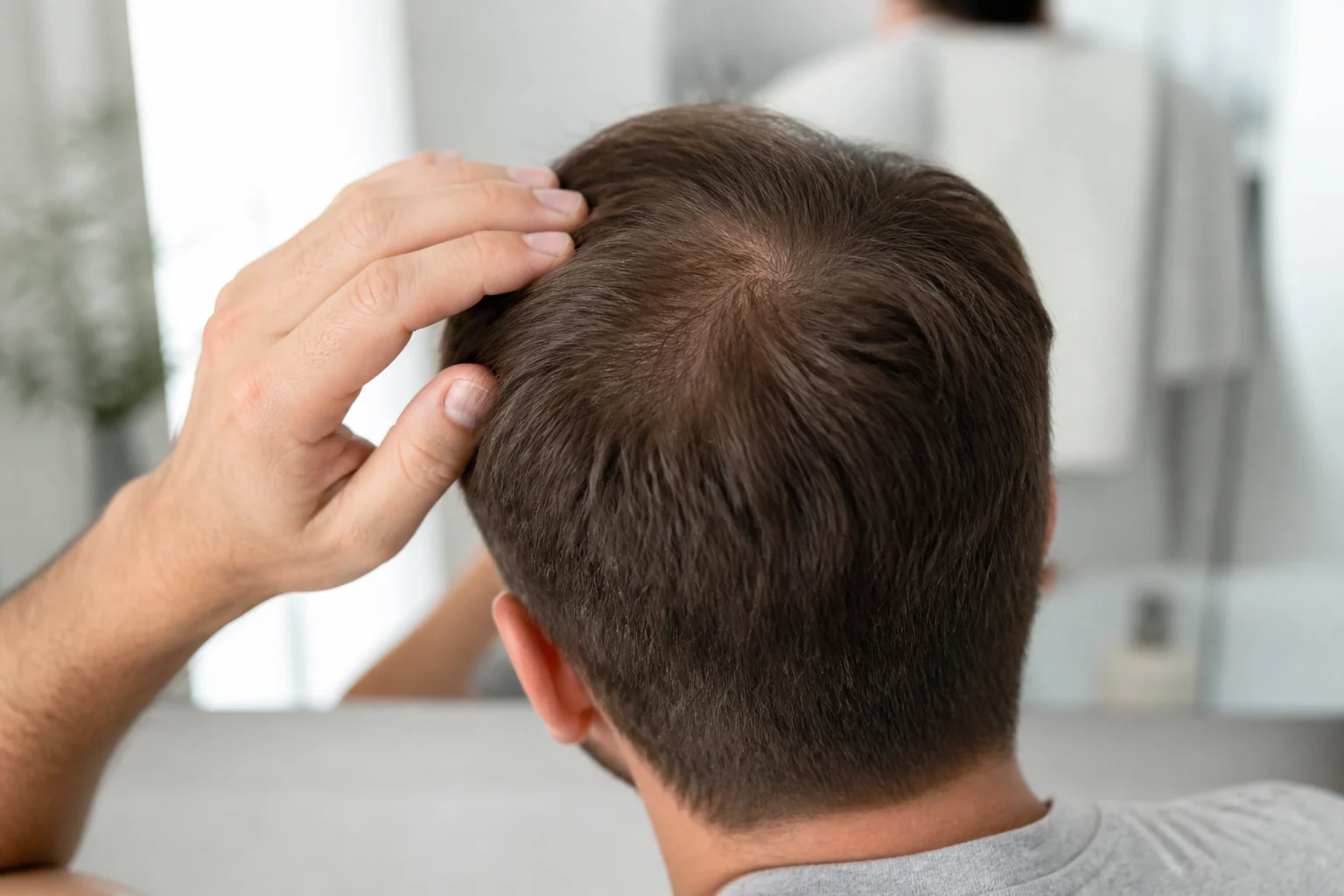
The important points
- Take a baseline before treatment starts.
- Keep lighting, angle, distance, hair length and hairstyle as consistent as possible.
- Include front, temples, top and crown.
- Store dated originals without filters or artificial enhancement.
Build a repeatable setup
Choose a bright room with indirect light, a plain background and a fixed place for the camera. Use a tripod or mark the standing and camera positions. Wet and dry hair look different, so use the same condition each time.
Capture the clinically useful angles
Photograph the frontal hairline straight on, each temple, the top with the head tilted and the crown from above. A helper often produces more consistent crown images. Include the whole region rather than an extreme close-up alone.
| Point | Clinical meaning |
|---|---|
| Frequency | Baseline, then at the agreed review interval rather than every day. |
| File handling | Keep original dated files; avoid filters and compression where possible. |
| Consistency | Same room, light, camera distance, angle and hair condition. |
| Clinical context | Photographs support but do not replace history or examination. |
Interpret the set carefully
Hair length, styling fibres, a recent haircut and lighting can create apparent change. The clinician combines photographs with the timeline, shedding, adherence, scalp symptoms, treatment tolerance and the expected natural history.
Dr Ben Harry Clegg
General practitioner · Málaga registration 292911940 · Nerja Medical Center NICA 55712
Official sources and connected clinical guidance
Medical information and product instructions can change. Follow the leaflet supplied with the exact medicine and the individual plan agreed with your clinician.
Do you need an individual hair-loss assessment?
Discuss the pattern, previous treatment, medical history and the safest next step with an English-speaking doctor.